High Protein French Toast Casserole
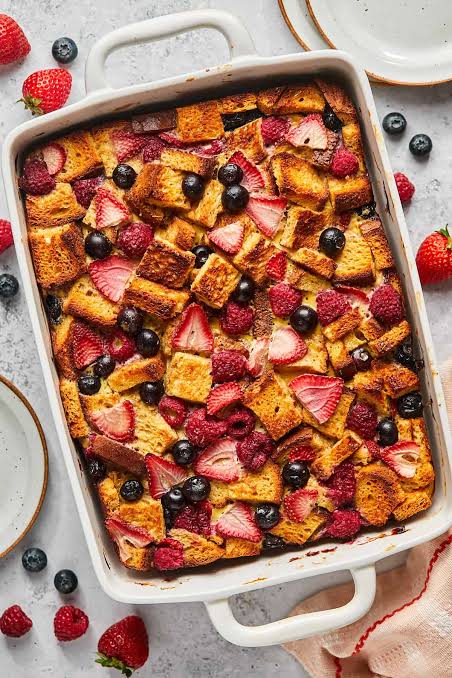
Baked French toast casserole made with eggs, Greek yogurt, and vanilla protein powder. Prep it the night before and bake in the morning. 22g of protein per serving with a custardy centre and golden top.

Baked French toast casserole made with eggs, Greek yogurt, and vanilla protein powder. Prep it the night before and bake in the morning. 22g of protein per serving with a custardy centre and golden top.
Per serving Β· Adjust servings below to scale ingredients
Rate this recipe
Be the first to rate this recipe
Lightly grease a 23 Γ 33 cm (9 Γ 13 inch) baking dish with butter or non-stick spray. Spread the bread cubes evenly in the dish in a roughly even layer.
In a large bowl, whisk together the eggs, Greek yogurt, milk, protein powder (if using), maple syrup, vanilla extract, cinnamon, nutmeg, and salt. Whisk vigorously until the mixture is fully smooth with no lumps of protein powder or yogurt remaining.
Pour the custard mixture evenly over the bread cubes. Press the bread down gently with a spatula to ensure every piece is submerged and fully saturated. Cover the dish tightly with cling film and refrigerate for at least 4 hours, or overnight (up to 12 hours). This soak is what gives the casserole its custardy texture rather than a dry, eggy one.
Remove the dish from the fridge 30 minutes before baking to take the chill off. Preheat the oven to 175Β°C (350Β°F).
Remove the cling film. If using, scatter the brown sugar evenly over the top for a caramelised crust. Bake uncovered for 35β40 minutes, until the top is golden brown and a knife or skewer inserted into the centre comes out clean with no liquid custard clinging to it.
Allow to rest for 5 minutes before cutting into 6 portions. Serve warm with fresh berries, a drizzle of maple syrup, and a dollop of Greek yogurt on the side.
Traditional French toast casserole uses white bread soaked in whole eggs and heavy cream, delivering very little protein relative to carbohydrates and fat. This version replaces heavy cream with Greek yogurt and adds vanilla protein powder to the custard, pushing protein from approximately 10g to 22g per serving without meaningfully increasing calories. The Greek yogurt also adds calcium, probiotics, and a slight tang that complements the cinnamon. Each serving delivers 22g of protein at 330 calories β 5.3 calories per gram of protein. The 37g of carbohydrates come primarily from the bread and are a reasonable amount for a morning meal that will be followed by physical activity. This recipe is best suited to maintenance or building phases rather than aggressive cuts, given its carbohydrate content.
This casserole was designed for meal prep. Assemble it in the dish the night before (Steps 1β3), cover and refrigerate. In the morning, remove from the fridge, preheat the oven, and bake β no morning prep required beyond turning on the oven. Once baked and cooled, cut into 6 portions and store in individual airtight containers in the fridge for up to 4 days. Reheat each portion in the microwave for 60β90 seconds. For freezer prep, wrap each cooled portion individually and freeze for up to 2 months. This recipe makes 6 servings, each delivering 22g of protein and 330 calories.
You can, but the result will be noticeably different β more like baked eggy bread than custardy French toast. If you are short on time, soak for at least 30 minutes and press the bread firmly into the custard every 10 minutes.
Day-old French bread, sourdough, brioche, or challah all work well. Brioche and challah produce the richest result. Sourdough adds a subtle tang. Avoid very dense breads like 100% wholemeal rye, which absorb slowly and produce a heavy texture.
Yes β bake first, then cool completely. Cut into 6 individual portions, wrap each tightly in cling film and then foil, and freeze for up to 2 months. Reheat from frozen in a 175Β°C oven for 15β20 minutes, or microwave for 2β3 minutes.
Vanilla-flavoured protein powder blends seamlessly into the custard and actually enhances the vanilla flavour. Use a protein powder you enjoy drinking β if it tastes good to you on its own, it will taste good here. Avoid unflavoured or casein-only powders, which can turn the texture gummy.