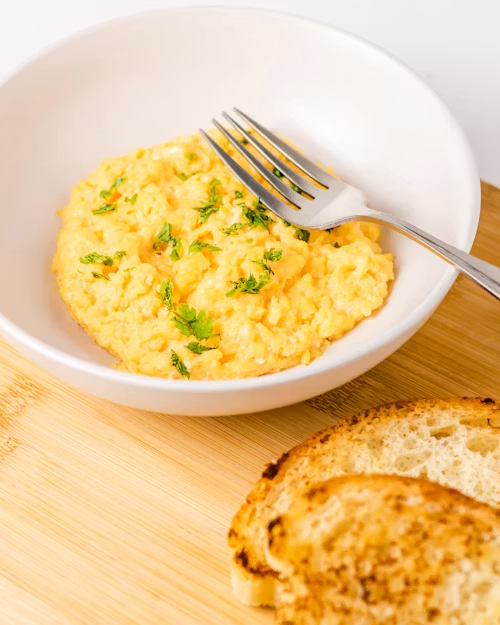
Cottage Cheese Scrambled Eggs
Ultra-creamy scrambled eggs made with melted cottage cheese. The cottage cheese disappears into the eggs during cooking, leaving silky curds and 29g of protein in under 10 minutes.
breakfasteasy
Ultra-creamy scrambled eggs made with melted cottage cheese. The cottage cheese disappears into the eggs during cooking, leaving silky curds and 29g of protein in under 10 minutes.
Per serving · Adjust servings below to scale ingredients
Rate this recipe
Be the first to rate this recipe
Crack the eggs into a bowl. Add a pinch of salt, black pepper, and garlic powder if using. Whisk until fully combined with no streaks of white remaining.
Add the cottage cheese and whisk again until incorporated. Small visible curds of cottage cheese are normal — they will melt into the eggs as they cook.
Place a non-stick skillet over medium-low heat. Add the butter and let it melt, swirling to coat the pan. Do not let it brown.
Pour in the egg and cottage cheese mixture. Let it sit undisturbed for 20–30 seconds until the very edges just begin to set.
Using a silicone spatula, gently fold the eggs from the outer edges toward the centre in slow, wide sweeping strokes. Do not stir quickly or scramble in small circles.
Continue folding every 20–30 seconds. If the eggs are cooking too fast, lift the pan off the heat for a few seconds between folds. Pull the pan off the heat when the eggs still look slightly underdone — residual heat will finish them in about 30 seconds.
Transfer immediately to warm plates. Scatter fresh chives over the top and serve with toast if desired.
Values are per 1 serving and stay fixed regardless of the servings adjuster above — use the adjuster to scale ingredients only.
Cottage cheese scrambled eggs are one of the most protein-dense breakfasts possible using everyday ingredients. Each serving delivers 29g of protein at only 320 calories — that is roughly 4.5 calories per gram of protein. The protein comes from two complementary sources: whole eggs (complete protein with all essential amino acids) and cottage cheese (rich in slow-digesting casein protein). Casein digests more slowly than whey, which means you stay fuller for longer compared with egg-only scrambles. With only 4g of carbohydrates per serving, this recipe fits comfortably into low-carb, ketogenic, or carb-cycling eating patterns. The 20g of fat comes almost entirely from the eggs and the small amount of butter, providing satiety and supporting fat-soluble vitamin absorption.
Scrambled eggs are not suitable for batch cooking — they become rubbery and release water when refrigerated and reheated. The good news is this recipe takes under 10 minutes from fridge to plate. To speed it up further, pre-weigh and refrigerate the cottage cheese the night before, and keep eggs at room temperature for 5 minutes before cooking. This recipe makes 2 servings, each delivering 29g of protein and 320 calories.
Mix the dry ingredients the night before. In the morning, add wet ingredients and cook — this cuts active time to under 5 minutes.
Use gluten-free alternatives for the bread/pasta/tortilla component. The protein and sauce parts are naturally gluten-free. Check all packaged sauces for hidden gluten.
The pan must be hot before the protein goes in — add oil and wait until it shimmers. Pat the protein completely dry first (moisture prevents browning). Don't crowd the pan; cook in batches with space between each piece.
Recipe by
BoBo ChefFitness enthusiast and home cook. Every recipe is tested in a real kitchen and macro-verified before publishing.